


Tartan Dahlias
Tartan Dahlias
SKU:PER-DAH-DTR-NA-5-GA
Enchant Your Garden With Tartan Dahlias
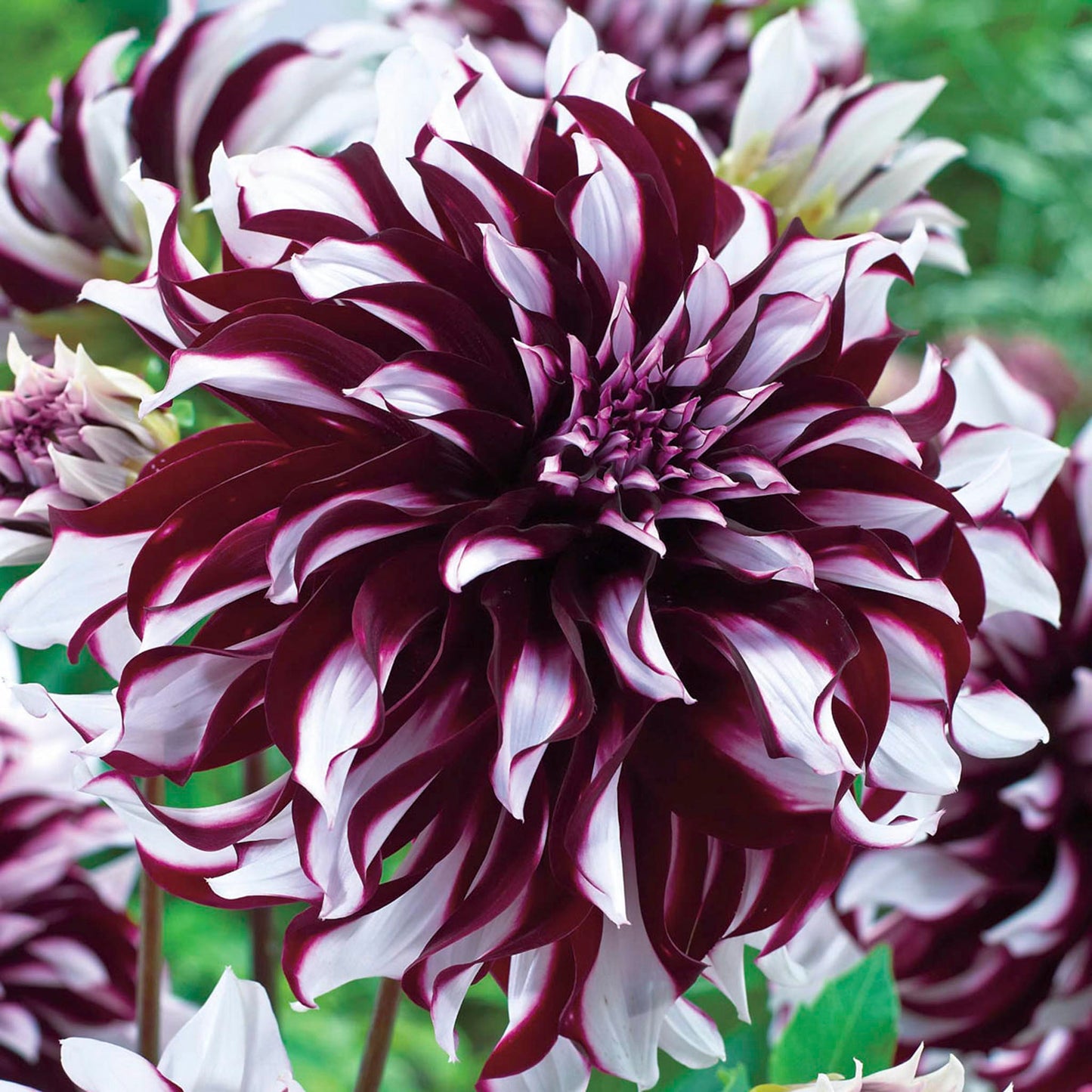
Big, bold, and wildly unique—the Tartan Dahlia is anything but shy. Each 8-inch bloom flaunts a dramatic swirl of deep maroon and bright white, like petals dipped in burgundy wine and brushed with snow.
No two flowers are exactly alike, making every bloom a surprise worth waiting for. The striking contrast and irregular striping give your garden an artsy edge—almost like nature’s own tie-dye experiment.
Why You'll Love Tartan Dahlias
- Massive 8" blooms with rich burgundy and white striping
- Strong, tall stems ideal for cutting and arranging
- Unique coloring—no two flowers are the same
- Perfect for back-of-border impact or as a focal point
- Thrives in containers for dramatic patio displays
Planted at the back of a border, Tartan doesn’t just hold its own—it steals the show. It’s a statement piece for any garden with a flair for the dramatic.
These ship as grade #1 bare root dahlia tubers, meaning they're of highest quality and health. They'll be ready to plant when they reach your doorstep in early spring!
Product Details
-
Product Category
Bulbs
-
Product Subcategory:
Dahlias
-
Botanical Name:
Dahlia 'Tartan'
-
Does Not Ship To:
-
Mature Height:
36-38 in.
-
Mature Width:
24 in.
-
Growing Zone:
3-10 outdoors
-
Indoor Growing:
-
Sunlight:
Full Sun
-
Growth Rate:
-
Harvest Time:
-
Bloom Time:
July-October

Planting Directions
<h2>How to Plant and Care for dahlias</h2> <h3>When to Plant</h3> <ul> <li>Wait until all danger of frost has passed and soil is at least 60°F.</li> <li>Store tubers in a cool, dark, dry place until ready. Do not refrigerate.</li> </ul> <h3>Planting Dahlia Tubers in the Ground</h3> <ul> <li>Choose a full sun location with well-drained soil.</li> <li>Dig a hole at least 2" deep and wide enough for the tuber or clump.</li> <li>Place tuber with the eyes or cut stem facing up (or lay on its side if unsure).</li> <li>Cover with soil. Do not water immediately unless soil is dry.</li> </ul> <h3>Planting in Containers</h3> <ul> <li>Use a large container (minimum 12" deep) with drainage holes.</li> <li>Fill with high-quality potting mix. Plant tuber as above.</li> <li>Place in full sun and water only when the soil dries out.</li> </ul>
<h3>Ongoing Care</h3> <ul> <li>Water deeply 2–3 times per week once growth appears; keep soil evenly moist.</li> <li>Mulch to retain moisture and reduce weeds.</li> <li>Support with stakes as plants grow to prevent flopping.</li> <li>Fertilize monthly with a low-nitrogen fertilizer (5-10-10 or similar).</li> <li>Deadhead spent blooms to encourage more flowers.</li> </ul> <p>In Zones 7 and colder, dig up tubers after first frost and store indoors for next year.</p>
FAQs
<h2>FAQs: Tartan Dahlias</h2> <ul> <li> <strong>1. How big do Tartan Dahlia blooms really get?</strong><br> Each bloom can reach up to 8 inches across—that’s about the size of a dinner plate. Their oversized, showy flowers make them a bold focal point in borders, beds, or containers. </li> <li> <strong>2. Can I grow Tartan Dahlias in containers?</strong><br> Absolutely. These dahlias thrive in large containers, which makes them perfect for patios, decks, or balconies. Just be sure the pot is at least 12-14 inches wide and deep to support their tall growth and root spread. </li> <li> <strong>3. When and how should I plant my Tartan Dahlia tubers?</strong><br> Plant your bare root tubers in spring, after the last frost has passed. Choose a sunny spot with well-draining soil. Bury them 2 inches deep, laying them horizontally with the eye (growing point) facing up. </li> <li> <strong>4. Do Tartan Dahlias need staking or support?</strong><br> Yes, these tall growers often reach 3 to 4 feet and benefit from support to keep their hefty blooms upright. Use garden stakes or tomato cages early in the season to avoid damaging roots later on. </li> <li> <strong>5. Will Tartan Dahlias come back every year?</strong><br> In colder zones (below USDA zone 8), you’ll need to dig up the tubers before the first hard frost and store them in a cool, dry place over winter. In warmer zones, they can be left in the ground and often return the following year. </li> </ul>