


Black Star Gladiolus Bulbs
Black Star Gladiolus Bulbs
SKU:PER-GLD-BLS-NA-25-GA
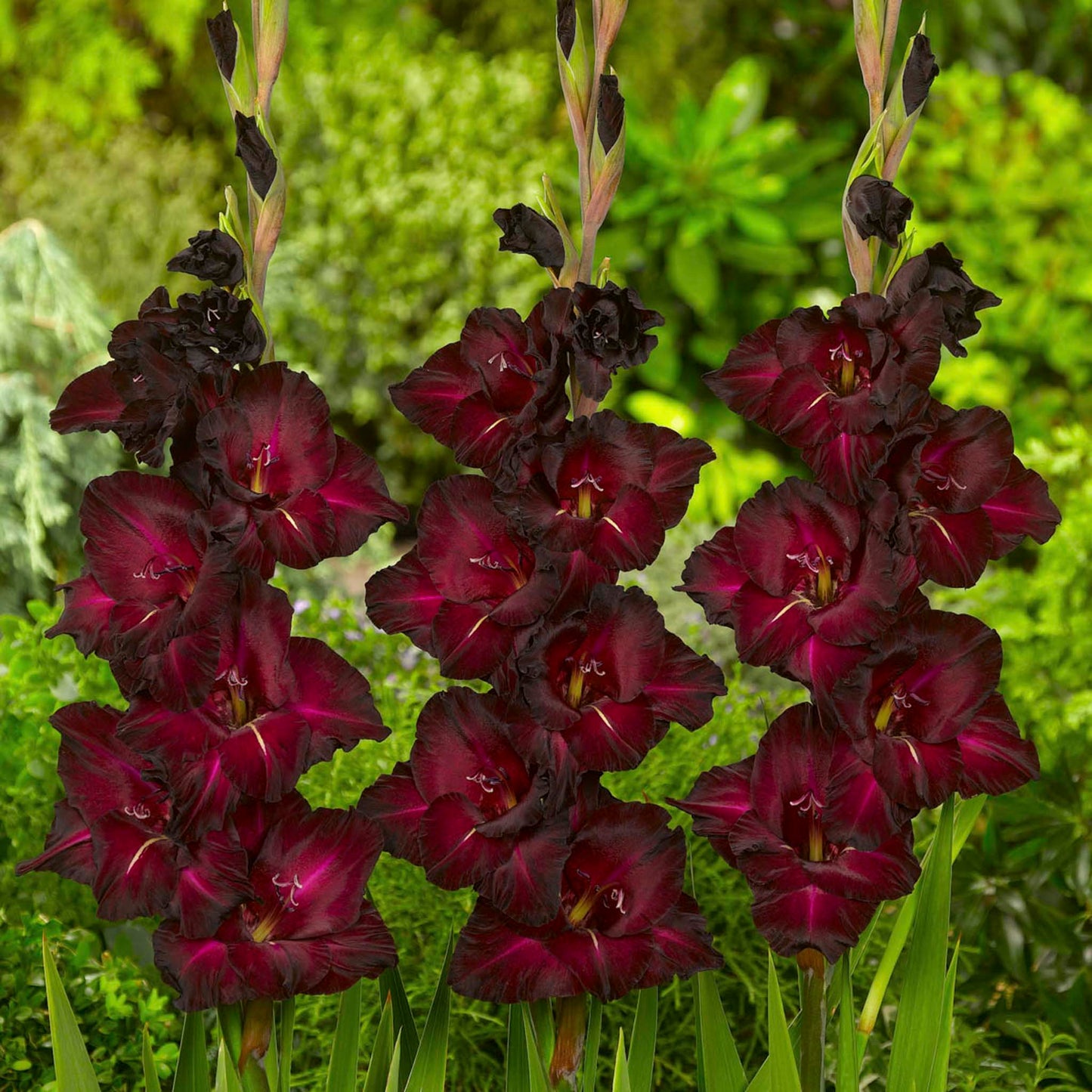
Gladiolus 'Black Star' – Dark Drama in Bloom
If you’re ready to turn heads in the garden, Gladiolus 'Black Star' delivers with its rich, wine-red blooms kissed by hints of black. These tall, sultry spikes rise above a fan of sword-shaped foliage, giving your beds, borders, or containers a bold focal point that's impossible to ignore.
Plant these bulbs in early spring and let the summer show begin—each stem a little tower of floral intrigue.
Why You'll Love Black Star Gladioluses
- Deep, wine-red flowers with a black undertone for high-impact color
- Perfect for summer borders, cutting gardens, or bold container displays
- Grows 36–48" tall—ideal for the back of beds
Don't wait to order your 25-pack of Black Star Gladiolus bulbs, perfect for planting in early spring and enjoying in summer!
Product Details
-
Product Category
Bulbs
-
Product Subcategory:
Gladioluses
-
Botanical Name:
Gladiolus 'Black Star'
-
Does Not Ship To:
-
Mature Height:
40-48 in.
-
Mature Width:
4-6 in.
-
Growing Zone:
3-10 outdoors
-
Indoor Growing:
-
Sunlight:
Full Sun
-
Growth Rate:
-
Harvest Time:
-
Bloom Time:
July to August

Planting Directions
<h2>How to Plant Gladiolus Bulbs</h2>
<h2>Planting Instructions</h2> <ul> <li><strong>Timing:</strong> Plant bulbs in spring after the last frost, when soil temperatures are at least 60°F.</li> <li><strong>Location:</strong> Choose a sunny spot with well-drained soil. Gladiolus do not tolerate soggy conditions.</li> <li><strong>Preparation:</strong> Loosen soil to a depth of 12 inches. Mix in compost or well-rotted manure to improve drainage and fertility.</li> <li><strong>Spacing:</strong> Plant bulbs (corms) 4–6 inches apart, in rows or clusters for the best visual effect.</li> <li><strong>Depth:</strong> Dig a hole 4-6 inches deep and place the bulb with the pointed side up. Cover with soil and gently press down.</li> </ul> <h2>Watering</h2> <ul> <li>Water thoroughly after planting to settle the soil.</li> <li>Keep the soil evenly moist during the growing season, but avoid waterlogging.</li> </ul> <h2>Fertilizing</h2> <ul> <li>Apply a balanced, slow-release fertilizer (10-10-10) when planting.</li> <li>Feed again when flower spikes emerge for larger blooms.</li> </ul> <h2>Care and Maintenance</h2> <ul> <li>Stake the plants if they grow tall and start to lean.</li> <li>Deadhead spent blooms to encourage continuous flowering.</li> <li>In colder climates, dig up bulbs after the first frost, dry them, and store them in a cool, dry place until spring.</li> </ul> <h2>Container Planting</h2> <ul> <li>Use a pot at least 12 inches deep with drainage holes.</li> <li>Plant bulbs 4-6 inches deep in a light potting mix.</li> <li>Follow the same watering and fertilizing instructions as for garden planting.</li> </ul>
FAQs
<h2>Black Star Gladiolus FAQs</h2>
<ul>
<li>
<strong>1. When should I plant Black Star Gladiolus bulbs?</strong><br>
Plant them in early spring after the danger of frost has passed. Gladiolus bulbs (also called corms) prefer warm soil—about 55°F or warmer—to kick off healthy growth and strong flower spikes by mid to late summer.
</li>
<li>
<strong>2. Do Black Star Gladioluses need full sun?</strong><br>
Yes, full sun is best. These dramatic bloomers thrive in at least 6–8 hours of direct sunlight daily. More sun = more blooms and stronger stems.
</li>
<li>
<strong>3. Can I grow Black Star Gladiolus in containers?</strong><br>
Absolutely. They’re a striking choice for large containers. Just make sure the pot is deep enough (at least 12–14") and well-draining. Group a few together for a vertical showstopper on patios or balconies.
</li>
<li>
<strong>4. How do I keep them standing tall?</strong><br>
These gladioluses can reach up to 48", so they may need staking, especially in windy spots. Planting them in groups helps provide mutual support. Another tip: bury the bulbs 4–6" deep to anchor them better.
</li>
<li>
<strong>5. Do I need to dig up the bulbs after blooming?</strong><br>
In zones colder than 8, yes—dig them up before the first hard frost, let them dry out, then store them in a cool, dry place over winter. If you're in a warmer zone, they can overwinter in the ground.
</li>
</ul>